Effects of a Mirror-imaging Rehabilitación Robot on Mano Motor Función in Subacute Ictus Patients: A Randomized Controlled Study - Centro de Ictus
Introduction
In recent years, with the development of science and technology, mano rehabilitación robots have gradually become one of the intelligent technological means to assist the development of rehabilitación medicine and promote neurological rehabilitación of mano función after ictus.
It has been widely used in clinical practice. In response to the different needs of patients for rehabilitación training, various mano rehabilitación robots that conform to modern rehabilitación concepts have been developed, including a rehabilitación robot with mirror training. However, its therapeutic effect on mano functional rehabilitación still lacks clinical evidence apoyo. This study is to explore the rehabilitación effects of a mirror-imaging rehabilitación robot on mano motor función in subacute ictus patients.
Methods
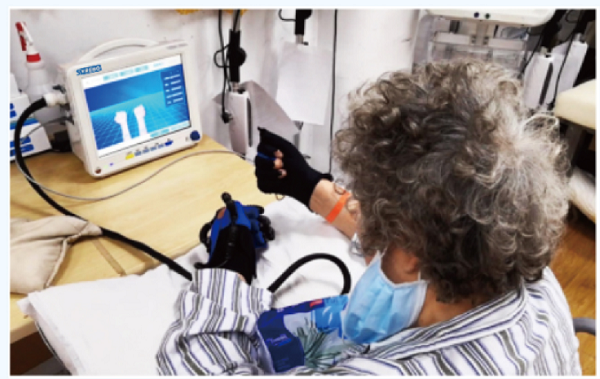
This retrospective study enrolled 40 subacute ictus patients. They were randomly divided into an observation group and a control group. Conventional rehabilitación terapia was given in both groups, rehabilitación robot((HR-08E, Syrebo)was added on this base in the observation group, which lasted for 4 weeks. Mano función was evaluated before and after 4 weeks of tratamiento.
Results
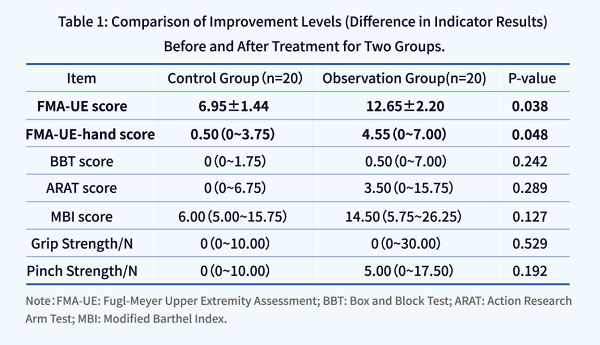
Statistical analysis of the degree of improvement found that the difference in FMA-UE score and FMA-UE mano score in the observation group was higher than in the control group, which was statistically significant.
For improvement degree, the improvement score of FMA-UE score (P=0.038) and FMA-UE mano score (P=0.048) in the observation group were all higher than that in the control group.
Conclusions
The mirror-imaging rehabilitación robot can mejorar mano motor función in subacute ictus patients. And, with the advantages of small size, portability and easy-to-operate, it can be used as an auxiliary terapia technology.
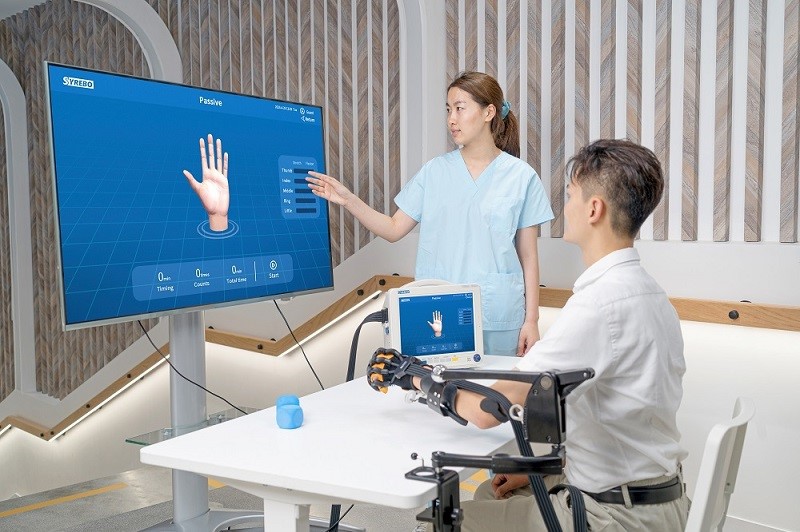
Syrebo Mano Rehabilitación Robot SY-HR08E